
Company

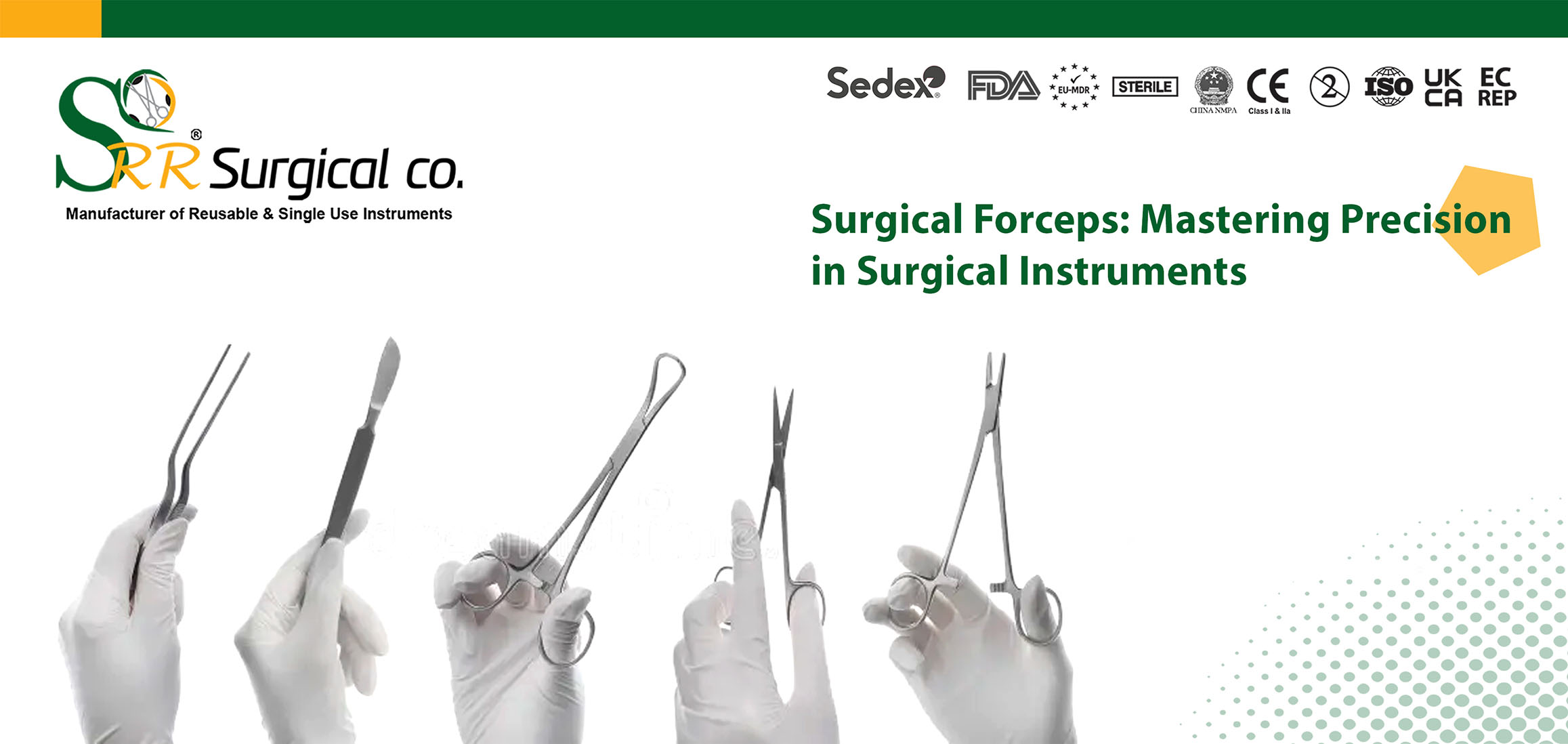
Surgical Forceps: Mastering Precision in Surgical Instruments
When you think of the accuracy of contemporary surgery, cutting instruments such as scalpels are usually the first to come to mind. But in the soft background of every sensitive procedure, another instrument takes on a similar level of importance—forceps. Needed for gripping, holding, manipulating, and removing, forceps are the behind-the-scenes heroes of the operating room. At Srr Surgical, we know that designing the ideal forceps instrument requires perfecting balance, power, and precision.
In this guide, we discuss the various types, applications, innovations, and major facts regarding forceps by Srr Surgical—demonstrating why they are relied on by surgical teams, dentists, gynecologists, and laboratory professionals across the globe.
Why Forceps are Indispensable in Surgery
Forceps are not just clamps—They are an extension of the surgeon’s finger which can contain control and delicacy which can be made through an only hand. In surgeries from dressing of wounds to craniotomy, an appropriate kind of forceps can make a huge difference in outcomes for patients.
Srr Surgical produces a wide variety of forceps designed for:
Every instrument is designed according to ISO 13485 and CE standards which ensure world-class performance and safety of patients.
Types of Forceps Available from Srr Surgical
We provide an extensive collection of forceps that cater to the requirements of various medical and surgical specialties. Here’s a closer examination:
Specialized Forceps for Specific Applications
| Forceps Type | Main Use |
| Gauze holding forceps | Grasping gauze during surgical procedures |
| Babcock forceps | Holding delicate tissues like intestines |
| Ash and Walsham forceps | Nasal fracture and septum realignment |
| Aural forceps | ENT surgeries (ear procedures) |
| Cotton holder forceps | Dental applications for holding cotton rolls |
| Bozeman uterine dressing forceps | Gynecological surgeries |
| Bayonet forceps | Deep field neurosurgeries and ENT |
Apart from being forceps for surgery, SRR’s instruments are relied upon in various fields:
Whether it is the allis tissue forceps application in tumor resections or the accuracy of ear dressing forceps in ENT surgeries, forceps are irreplaceable in specialties.
Specialty Designs: Forceps Variants by Srr Surgical
| Specialty Forceps | Notable Feature |
| Gemini forceps | Fine, curved tips for cardiovascular surgeries |
| Ferris Smith tissue forceps | Robust grip for orthopedic applications |
| Babcock intestinal forceps | Atraumatic jaws for soft tissue handling |
| Bulldog forceps | Vascular clamps during delicate procedures |
| Crocodile forceps | Extremely narrow jaws for ENT access |
| Foerster forceps | Sponge holding in deep cavities |
A surgeon’s arsenal is not complete without tools that enable suturing:
What Makes Forceps by Srr Surgical Unique?
Every pair of Srr Surgical forceps is designed not only to work but to enable surgeons, dentists, and medical professionals around the globe.
Real-World Testimonials
SRR’s dissecting forceps are like an extension of my hand—consistent in even the most sensitive neurosurgical procedures.
Dr. Fatima Raza, Neurosurgeon, UAE
From allis tissue forceps to artery clamps, SRR provides consistency and quality I can rely on throughout surgeries.
Dr. Tariq Khan, Orthopedic Surgeon, Lahore
Global Manufacturing Standards for Surgical Instruments
Purpose: Defines requirements for a medical device-specific quality management system.
Why it matters: Guarantees that equipment complies with regulatory requirements, patient safety, and uniform quality.
How it’s implemented:
Required for: Sale of surgical instruments in the European Union (EU) and European Economic Area (EEA).
Indicates: Conformity to EU Medical Device Regulations (MDR).
Ensures:
Applicable to: Manufacturers selling in the United States.
Aims at: Quality assurance, validation, and complaint handling.
What it covers:
ASTM F899: Standard for stainless steel used in surgical instruments.
ISO 7153-1: Defines corrosion-resistant steel and alloys for instruments.
Rationale: Guarantees materials:
Needed to label instruments as “sterile.”
Instruments need to be able to withstand validated sterilization processes such as:
Srr Surgical’s Commitment to Quality
Srr Surgical follows all of the above and beyond:
Conclusion: Precision-Leading Forceps
Within surgery, dentistry, gynecology, or laboratory conditions, precision and results can be decided by selecting the correct forceps. Srr Surgical’s forceps are designed for excellence—forged for hands that save lives.
Whether forceps 22, forceps 27, forceps 67, or forceps 68 are what you require, Srr Surgical’s instruments provide unbeatable performance consistently.